
A Shrine That Remembers When Hiroshima Was the Sea
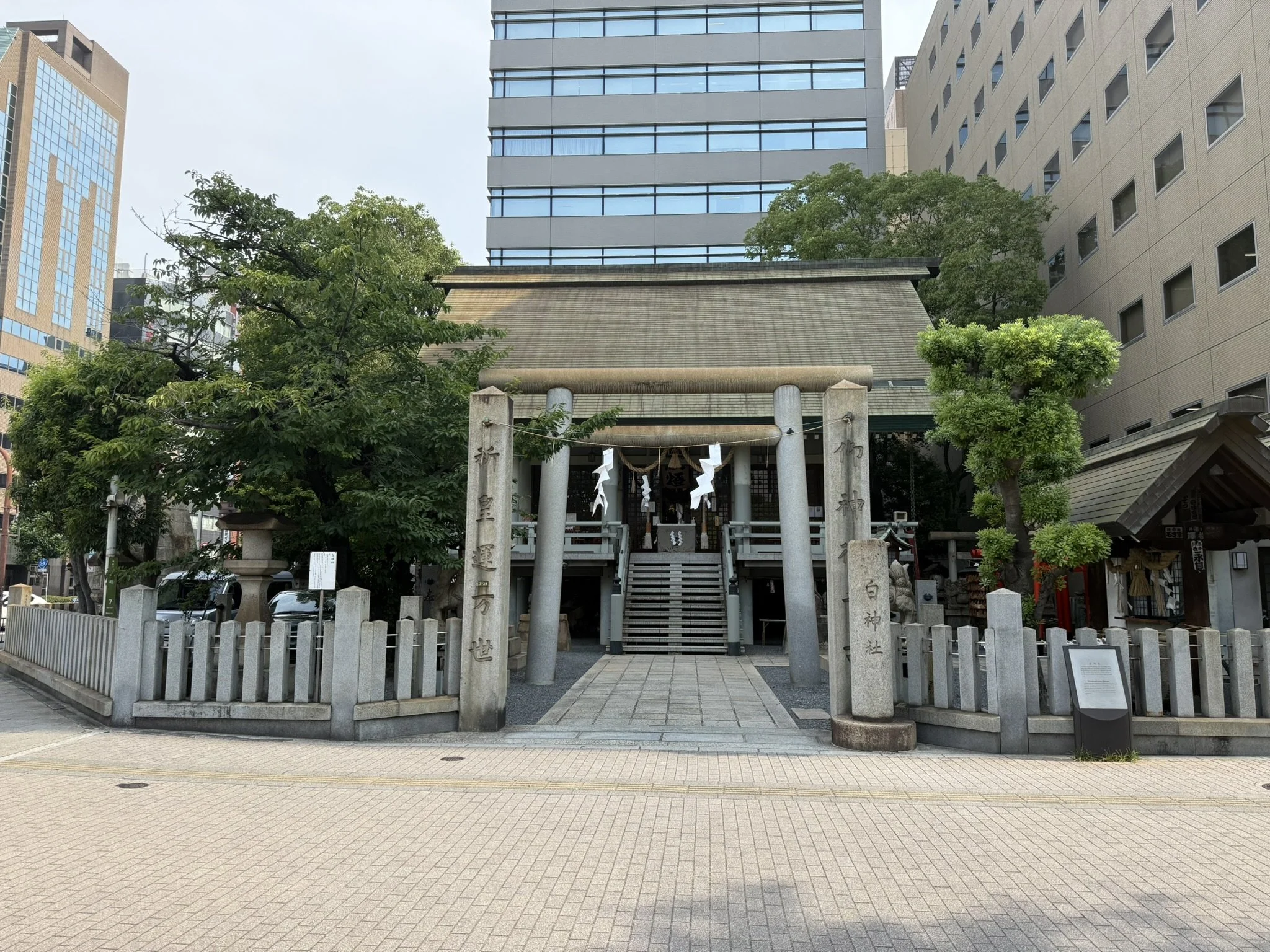
Shirakami-Shrine, Hiroshima city, Japan
During a half-day tour in Hiroshima this August, I had one of those unexpected encounters that reminded me why I still enjoy guiding after hundreds of tours.
We stopped at Shirakami Shrine, a small Shinto shrine in the center of Hiroshima. It is a place I sometimes introduce to guests because it quietly tells several different stories about the city.
Today, Shirakami Shrine stands among office buildings, hotels, and busy streets in central Hiroshima. It is difficult to imagine that this area was once at the edge of the sea.
But the exposed rocks within the shrine grounds are a reminder of exactly that.
Centuries ago, this area was part of the coastline. According to local history, white paper was placed on rocks protruding from the water to warn passing boats of the danger. The name Shirakami is said to be connected to this story.
As Hiroshima Castle and the castle town developed around 400 years ago, land reclamation gradually pushed the coastline farther south. What was once close to the sea eventually became part of today's city center.
This is one reason I find the shrine interesting when explaining Hiroshima's history. The modern city looks remarkably flat, but its landscape is partly the result of centuries of delta formation and land reclamation.
When discussing the history of the atomic bombing, I sometimes ask guests to think about Hiroshima not only as the city we see today, but also in terms of its geography and how that geography developed.
Shirakami Shrine itself stood only about 500 meters from the hypocenter in 1945. Its buildings were destroyed, while some stone structures and trees survived.
Learning How to Pray at a Shinto Shrine
On this particular visit, we had a chance to speak briefly with the Shinto priest.
He explained some of the customs surrounding prayer, including the order of making an offering and ringing the bell. Small details like these are often more interesting when they come directly from someone who actually serves at the shrine rather than from a guidebook.
Then something even more unexpected happened.
When we entered the shrine office, I recognized someone.
He was a Buddhist priest from Daisho-in Temple on Miyajima, a temple I visit regularly with guests.
Why was a Buddhist priest helping at a Shinto shrine?
I asked, and learned that he occasionally comes to help here. Even more interestingly, the Shinto priest told us that during the busy New Year period, he sometimes goes in the other direction and helps at Daisho-in.
For visitors who expect Shinto and Buddhism to exist in completely separate worlds, this can seem surprising.
Shinto and Buddhism in Everyday Japanese Life
Shinto developed from Japan's indigenous religious traditions, while Buddhism arrived in Japan from the Asian continent more than 1,400 years ago.
Their relationship over the centuries is complicated and deserves much more explanation than I can give here. But broadly speaking, Japanese society has incorporated traditions from both.
Even today, people may visit a Shinto shrine at New Year, hold a Buddhist funeral, buy an amulet for an exam, visit a temple while traveling, or participate in local religious festivals without necessarily thinking deeply about which religious category each activity belongs to.
As a guide, I often explain this flexible relationship to my guests.
But that afternoon, seeing a Buddhist priest casually helping at a Shinto shrine—and hearing that the Shinto priest sometimes returned the favor—made something I regularly explain on tours suddenly feel very tangible.
Sometimes a small encounter explains more than a long lecture.
An Omamori for a Child Thousands of Kilometers Away
There was another reason we had entered the shrine office that day.
One of my guests wanted to buy an omamori, a Japanese amulet, for her child.
Her child was preparing for university and needed to maintain good academic results, so she carefully looked through the different amulets and chose one associated with academic success.
Watching her choose it made me smile.
I have two daughters myself, and it reminded me that wherever we come from, parents worry about remarkably similar things.
University entrance, exams, grades, and what comes next.
The language and culture may be different, but concern for our children's future is not.
Perhaps that was my favorite part of the visit.
A shrine that tells us something about Hiroshima's ancient coastline and the city's wartime history also became, for a few minutes, a place where a parent from another country could make a small wish for her child's future.
These are the moments I enjoy finding while walking through Hiroshima with my guests.
They are rarely written into the itinerary.
And perhaps that is precisely why I remember them.
