
Hiroshima Traditional Crafts: A Hands-On Gold Leaf Experience with a Local Artisan
When people think of Hiroshima, the Peace Memorial Park and Miyajima are usually the first places that come to mind.
They are important places to visit, and I take many of my guests there. But as someone born and raised in Hiroshima, I also enjoy introducing visitors to another side of the city — its local crafts, businesses, food, and the people who keep these traditions alive.
Recently, I had the opportunity to visit a local workshop run by the Takayama family and try something I had never done before: making a gold-leaf pencil.
I originally went there for the hands-on experience. What I discovered, however, was a much more interesting story about Hiroshima craftsmanship.
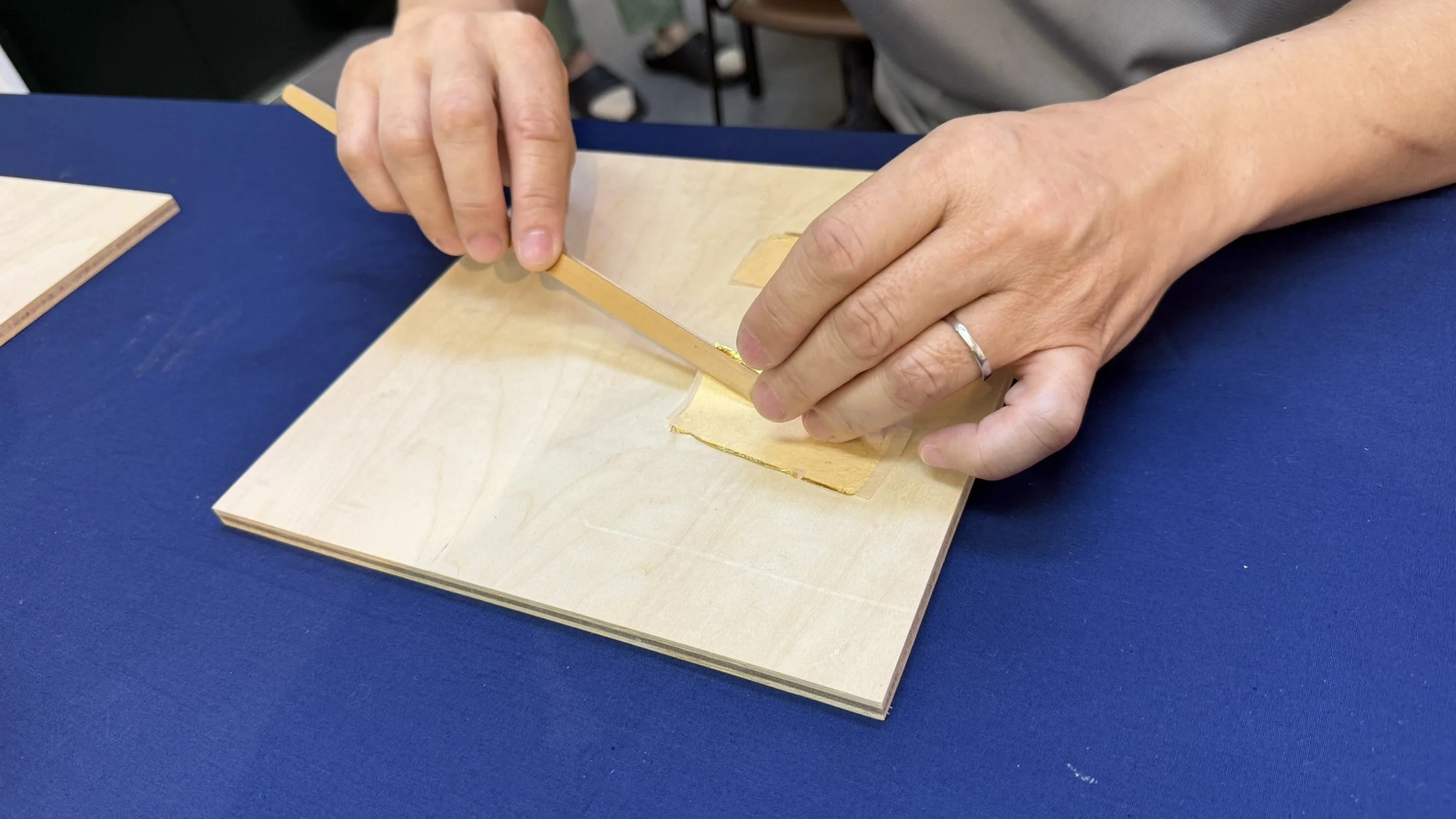
Trying the delicate process of applying gold leaf during my visit.
Trying a Gold-Leaf Craft Experience in Hiroshima
The experience gave me a chance to work directly with gold leaf and see how much concentration such a delicate material requires.
Watching an experienced craftsperson work always looks relatively easy. Doing it yourself is another matter.
Handling the thin gold leaf requires patience and careful movements. It was an enjoyable hands-on activity, but what interested me even more was understanding where these skills came from.
Gold-leaf application is not simply a modern craft experience created for visitors.
It is connected to a much longer tradition in Hiroshima.
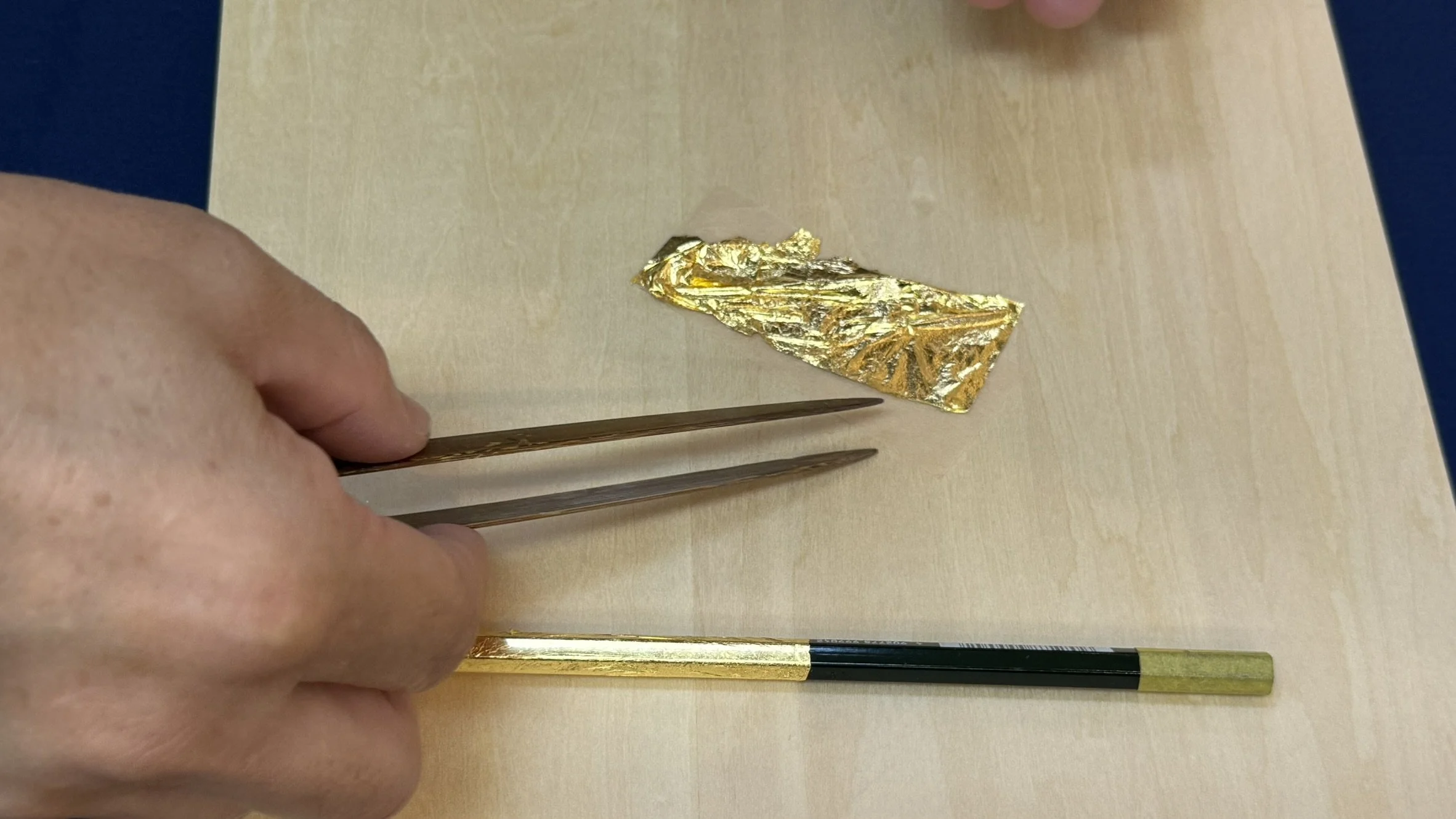
Close-up of the craft process
The Connection to Hiroshima Buddhist Altars
The Takayama family's original business is the production and restoration of Hiroshima Buddhist altars, or Hiroshima butsudan.
Traditional Buddhist altar making requires a combination of highly specialized techniques, including woodworking, lacquer coating, carving, decorative metalwork and gold-leaf application.
That immediately made my gold-leaf pencil experience more interesting.
The technique I was trying in a relatively casual workshop has its roots in craftsmanship that has been passed down through generations.
During my visit, I was also able to see a traditional Buddhist altar and learn more about how these different skills come together.
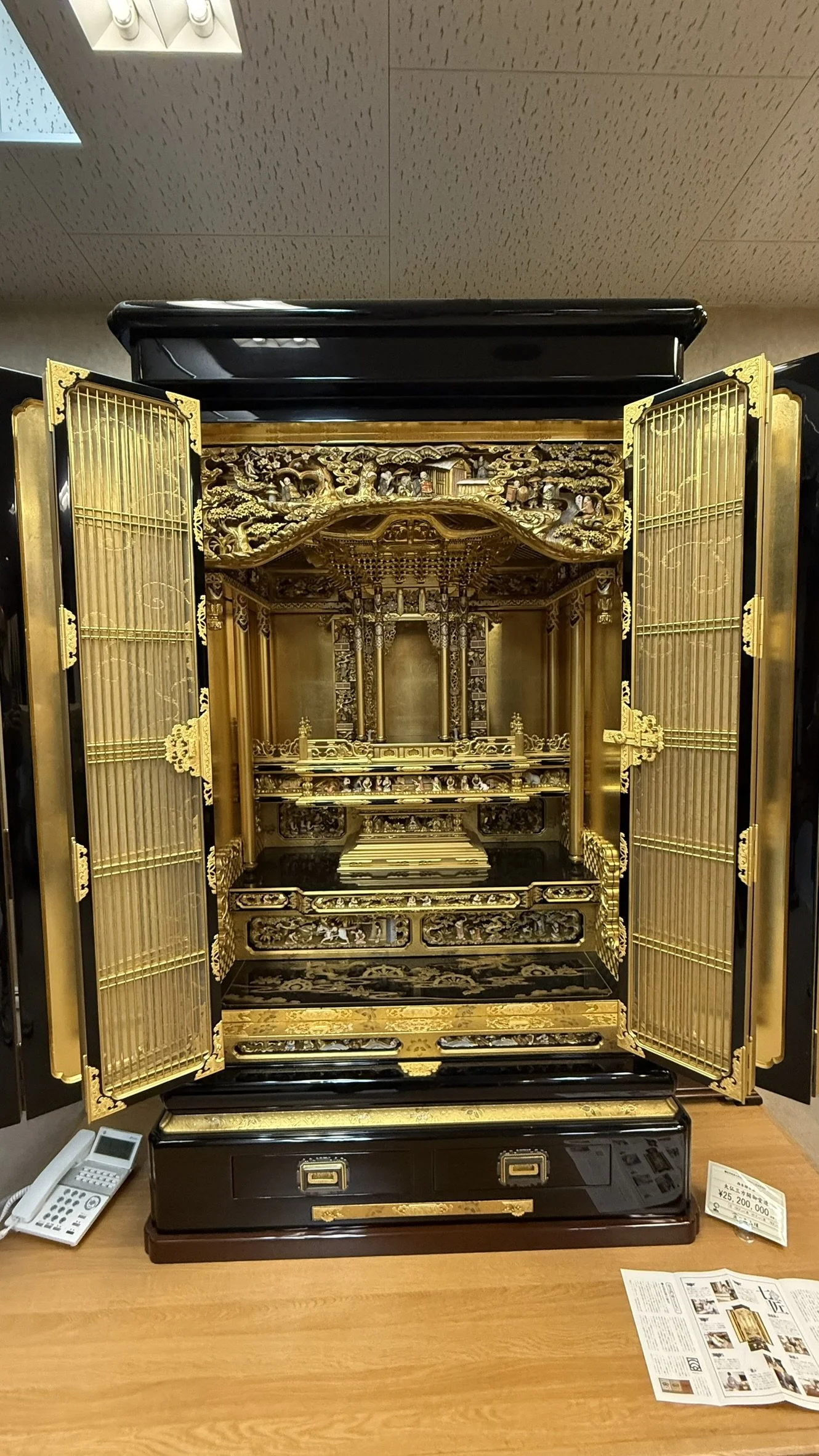
Buddhist altar
Gold-leaf work and lacquer techniques have long played an important role in traditional Hiroshima Buddhist altar making.
For international visitors, Buddhist altars can sometimes be difficult to understand simply by looking at them.
But when you learn how many different craftspeople and techniques are involved in creating one, you begin to see them differently.
They are not simply religious objects. They are also examples of highly detailed Japanese craftsmanship.
Hiroshima's History of Buddhist Altar Making
One of the things I found particularly interesting was learning about Hiroshima's history as an important center of Buddhist altar production.
The development of the craft was closely connected to the region's history, religion, transportation networks and geography.
This is something I enjoy discovering even as a Hiroshima local.
We often think we know our hometown well, but visiting local businesses and talking directly with craftspeople regularly reminds me how much there is still to learn.
That is also one reason I like incorporating local workshops, artisans and small businesses into customized Hiroshima experiences when they fit a guest's interests.
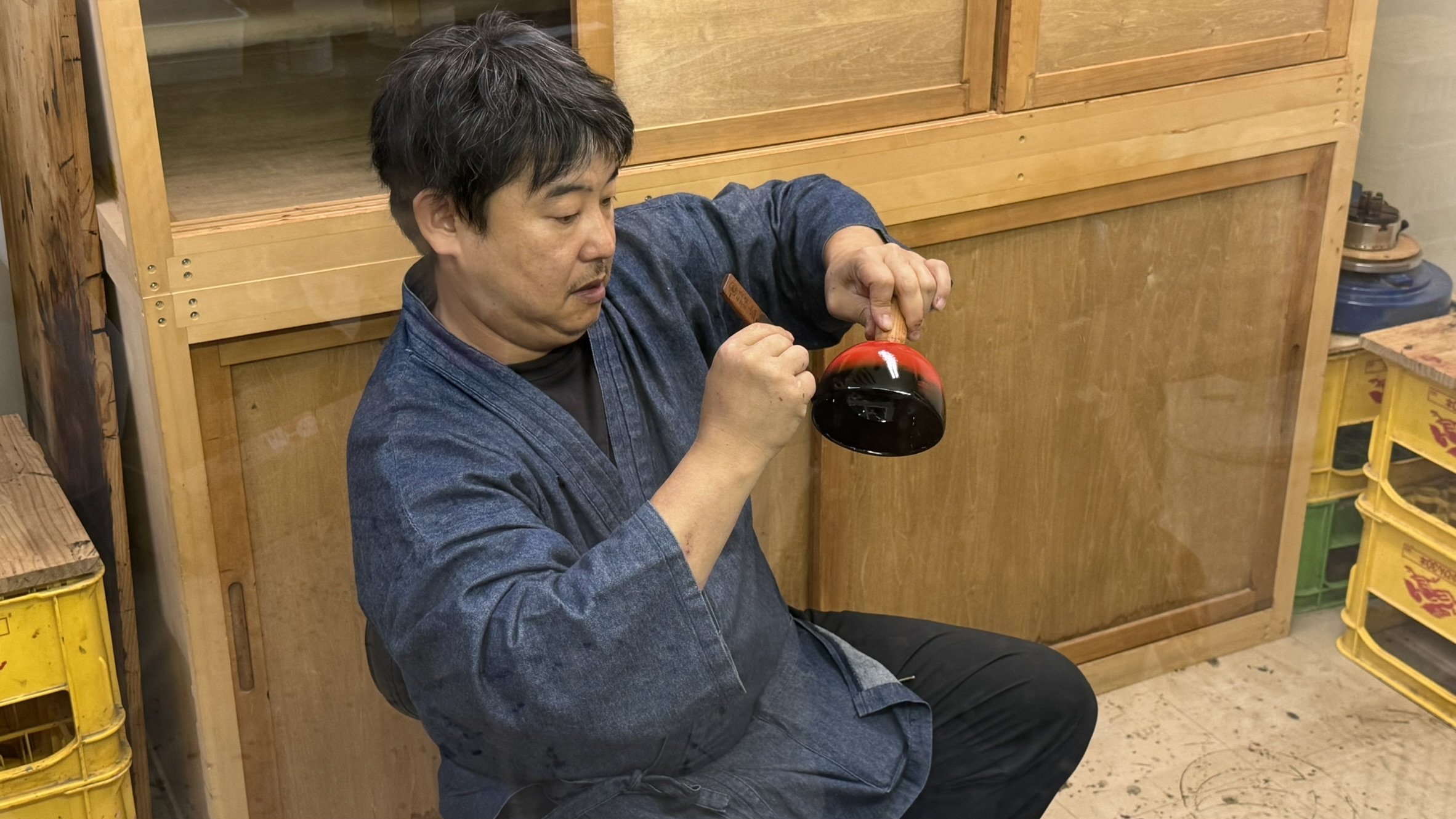
Artisan at work
Traditional Techniques, Contemporary Hiroshima Lacquerware
Upstairs, I had the opportunity to see lacquerware created by Naoya Takayama.
This was probably the biggest surprise of my visit.
The pieces were beautiful.
Some incorporated a particularly Hiroshima element: powder made from oyster shells.
Hiroshima is famous throughout Japan for oyster cultivation, and I found the idea of connecting this local material with traditional lacquer techniques particularly interesting.
The oyster-shell material contributes to the distinctive appearance and properties of the pieces, creating a connection between Hiroshima's maritime culture and its craft traditions.
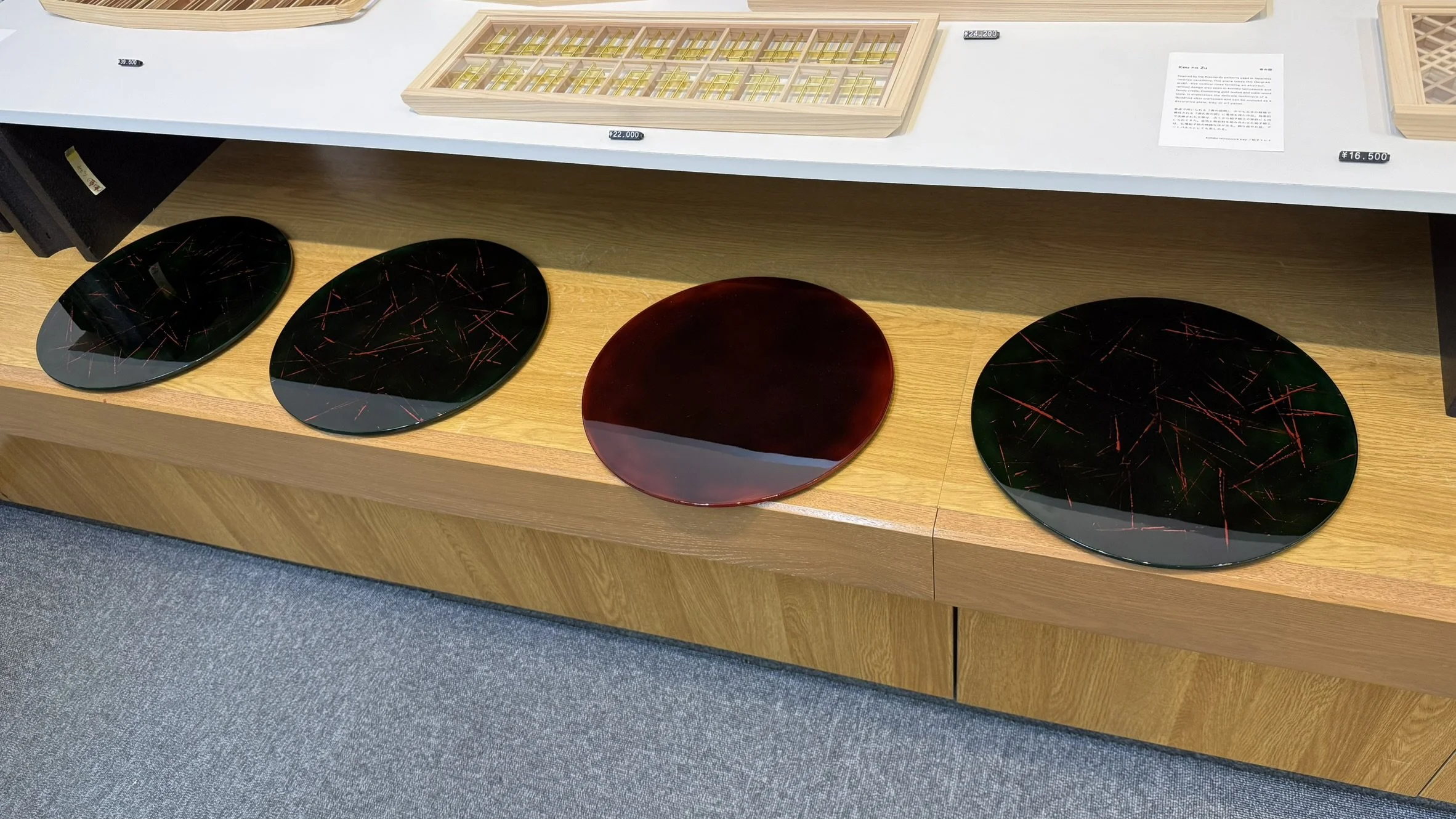
Lacquerware
Contemporary lacquerware combining traditional techniques with materials closely associated with Hiroshima.
This is the kind of detail that I think makes local travel more interesting.
An oyster shell might seem completely unrelated to traditional lacquerware.
But once someone explains the connection, a seemingly simple object can tell you something about the geography, industry and culture of a place.
From a Local Workshop to the G7 Hiroshima Summit
Naoya Takayama's work also received international attention in connection with the 2023 G7 Hiroshima Summit.
His craftsmanship was selected for gifts presented to participating world leaders, bringing contemporary Hiroshima craft to an international audience.
Seeing the pieces in person gave me a much better appreciation of the workmanship involved.
Rather than treating traditional craft as something preserved only in museums, I found it interesting to see techniques inherited from Hiroshima's Buddhist altar industry being adapted into objects that can be used and appreciated today.
[
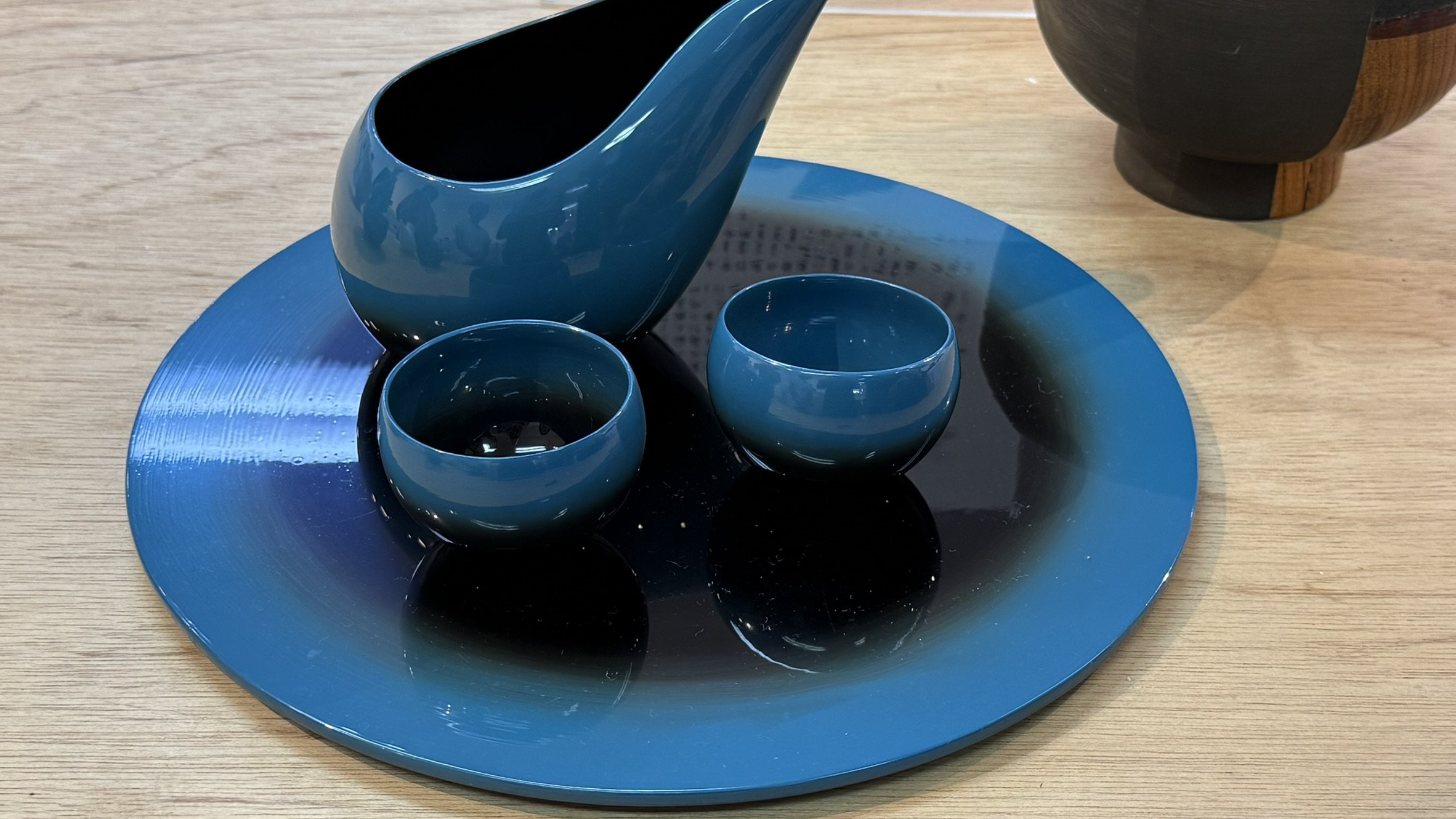
Finished lacquerware
Why Local Craft Experiences Can Add Something Different to a Hiroshima Visit
For first-time visitors to Hiroshima, I would still recommend seeing the city's essential places.
The Peace Memorial Park provides important historical context, while Miyajima introduces visitors to a very different side of Hiroshima through its landscape, religious traditions and island culture.
But if you have additional time — or if you have a particular interest in Japanese craftsmanship, design, art or local culture — experiences like this can add another dimension to a visit.
Instead of only seeing a finished product in a shop, you can meet the people behind it, understand the materials and techniques, and sometimes try part of the process yourself.
For me, that human connection is often what makes a travel experience memorable.
Discovering Hiroshima Beyond the Famous Sights
One reason I continue visiting workshops, restaurants, temples and lesser-known places around Hiroshima is simple:
I am still discovering my own city.
And those discoveries eventually become useful when a guest asks me:
"We have already seen the major sights. Is there something different we can experience in Hiroshima?"
There is.
Hiroshima is much more than a checklist of famous attractions.
Traditional craftsmanship, sake, local food, the Seto Inland Sea, small temples, family-run businesses and conversations with local people can all become part of the experience.
Not every traveler needs the same itinerary.
And sometimes a few hours spent with a local craftsperson can tell you as much about a destination as visiting another famous landmark.
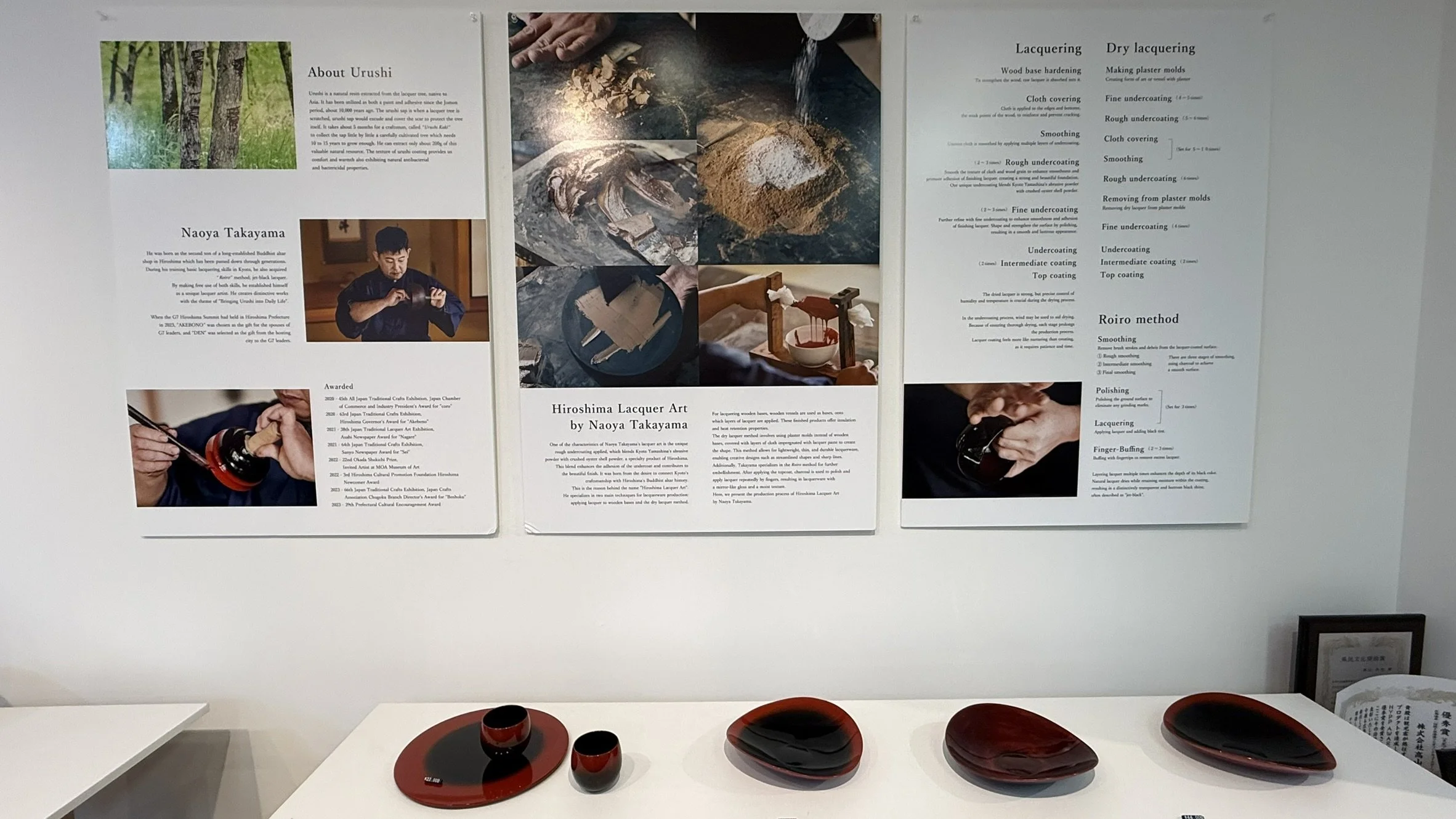
Workshop/showroom
Interested in a More Personal Hiroshima Experience?
I offer private tours in Hiroshima and Miyajima, as well as customized experiences for travelers who would like to explore beyond the standard sightseeing route.
If you are interested in traditional crafts, local food, sake, history, culture or meeting local people, feel free to get in touch.
I would be happy to discuss what can realistically fit into your time in Hiroshima.
Explore Hiroshima with a local guide — and discover some of the stories that are easy to walk past on your own.
